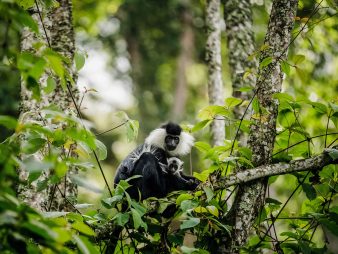

Bwindi Impenetrable National Park is one of Africa’s most remarkable natural sanctuaries, renowned for its ancient rainforest, exceptional biodiversity, and as the world’s most famous stronghold for mountain gorillas. Located in southwestern Uganda, this UNESCO World Heritage Site is characterized by steep ridges, deep valleys, mist-covered slopes, and dense vegetation that has earned the forest the name “Impenetrable.” Its ecological significance is immense, acting as a refuge for numerous endemic and endangered species while offering visitors one of the most intimate wildlife encounters on the continent.
The park spans more than 320 square kilometers, making it a compact yet astonishingly rich ecosystem of montane and lowland forest. Bwindi’s elevation ranges from about 1,160 to 2,600 meters, creating distinct habitat zones that support a wide array of flora and fauna. The thick forest canopy, lush undergrowth, and dramatic terrain combine to create an unforgettable atmosphere for travelers who come in search of nature, adventure, and close-up wildlife experiences.
Quick Facts About the Destination
Bwindi Impenetrable National Park is best known for its population of mountain gorillas, one of the rarest primates on Earth. Nearly half of the global population resides here, making the park a crucial conservation area for the survival of the species. The setting is an ancient rainforest that has persisted for more than 25,000 years, one of the few African forests that remained intact during the last Ice Age. Its longevity has allowed an abundance of species to evolve and thrive, leading to exceptional levels of endemism.
The park hosts more than 120 mammal species, including forest elephants, duikers, giant forest hogs, golden cats, and numerous primates. Birdlife is particularly notable, with over 350 recorded species, including many Albertine Rift endemics that draw birdwatchers from around the world. Bwindi’s vegetation is another highlight: more than 1,000 plant species flourish in the park, including ancient hardwoods, ferns, and a variety of medicinal plants that have been historically used by local communities.
Bwindi is also home to the Batwa people, one of Africa’s oldest indigenous groups. Their presence adds a rich cultural layer to the visitor experience, offering insight into forest-based lifestyles that date back centuries. The park’s conservation programs often involve local communities, contributing to sustainable development while strengthening the protection of gorillas and their habitat.
Popular Activities
Gorilla trekking is the most iconic and sought-after activity in Bwindi. Visitors follow experienced ranger guides through dense vegetation, steep slopes, and narrow forest paths to reach habituated gorilla families. The trek can last anywhere from one to several hours depending on the group’s location, but the reward is extraordinary: a full hour spent observing the gorillas in their natural environment. Watching these powerful yet gentle creatures interact, feed, groom, and care for their young provides a rare and deeply moving wildlife experience.
Birdwatching is another major activity for those visiting Bwindi. The park is recognized as one of Africa’s premier birding destinations due to its high number of Albertine Rift endemics. Species such as the African green broadbill, Shelley’s crimsonwing, and the regal sunbird are among the key highlights. The varied terrain allows for exceptional viewing opportunities, whether along forest trails, in clearings, or near community edges where certain species are easier to spot.
Forest walks and nature hikes offer visitors a chance to immerse themselves in the park’s ancient ecosystem. Trails vary in difficulty and length, leading through bamboo zones, river valleys, mossy forest floors, and scenic ridges. These walks reveal the forest’s smaller wonders: butterflies, orchids, waterfalls, and a multitude of plants that contribute to the area’s ecological significance. Some routes also lead to scenic viewpoints overlooking the terraced hills and villages surrounding the park.
Cultural experiences, particularly with the Batwa community, provide a meaningful complement to the natural attractions. Guided cultural visits offer a glimpse into traditional hunter-gatherer practices, storytelling, dance performances, and demonstrations of forest survival skills. These activities contribute to the livelihoods of local communities while educating visitors about the importance of preserving both cultural heritage and natural ecosystems.
When to Visit
Bwindi Impenetrable National Park can be visited throughout the year, and each season brings its own style of beauty and experience. During the wetter months, typically from March to May and again from October to November, the forest becomes even greener and more atmospheric as mist rolls through the canopy and moisture intensifies the sounds and scents of the rainforest. These months offer a quieter experience, as fewer travelers visit during the rainy season.
The drier periods, from June to September and December to February, offer easier trekking conditions. Trails are less muddy, vegetation is less slippery, and visibility is generally better, making gorilla tracking more comfortable. Wildlife can also be slightly easier to locate as animals often gather in areas with greener vegetation or near water sources during the drier times.
Best Time to Visit
The best time to visit Bwindi is during the dry seasons: June through September and December through February. These periods provide optimal trekking conditions, making it more manageable to navigate the steep and rugged terrain. Clearer skies enhance scenic views, while reduced rainfall helps maintain better trail access. While wildlife can be observed year-round, the dry season significantly improves the overall experience, especially for visitors seeking gorilla encounters or birdwatching opportunities.