
Lake Manyara National Park is one of Tanzania’s most diverse and scenic protected areas, offering a compact yet richly varied safari experience. Nestled between the dramatic cliffs of the Great Rift Valley and the expansive alkaline waters of Lake Manyara, the park showcases striking contrasts in landscape. From dense groundwater forests to open floodplains, hot springs, and acacia woodlands, this diversity supports a remarkable range of wildlife. Although smaller than many northern circuit parks, Lake Manyara is known for its unique features, including tree-climbing lions, vast flocks of flamingos, and lush vegetation that creates an evergreen feel for much of the year. Its accessibility from Arusha makes it a popular addition to Tanzania’s classical safari routes.
When to Visit
Lake Manyara National Park is a rewarding destination throughout the year due to its unique ecological zones and diverse wildlife. The green season brings a lush environment, with groundwater forests flourishing and the lake expanding across its floodplains. This period is excellent for birdwatching, as migratory species arrive and water levels rise, creating ideal feeding grounds. The dry season offers easier wildlife spotting as animals move out of the dense forests toward the open clearings and water sources. While rainfall can influence accessibility to certain areas during the wettest months, the park remains manageable and enjoyable for most visitors year-round. Travelers should consider what they hope to see—birdlife, mammals, or specific scenery—when choosing their preferred season.
Best Time to Visit
The best time to visit Lake Manyara National Park is during the dry season from June to October. Wildlife viewing is at its peak during these months because animals congregate near reliable water sources and vegetation becomes less dense, improving visibility during game drives. This is also the period when the iconic tree-climbing lions are more frequently observed. However, birdwatching enthusiasts may prefer the wet season from November to April when migrant species arrive and flamingo populations tend to increase along the lakeshore. Each season offers distinct experiences, but the dry months provide consistently strong wildlife encounters and ideal conditions for exploring the park’s varied landscapes.
Quick Facts About the Destination
Lake Manyara National Park covers approximately 330 square kilometers, with the alkaline lake itself making up the majority of the area. One of the park’s signature features is its dense groundwater forest, fed by streams flowing from the Rift Valley escarpment, creating a cool, shaded environment unlike most other East African parks. The park is renowned for its tree-climbing lions, a rare behavior seen in only a few places across Africa. Large troops of olive baboons are another hallmark, often seen near the entrance, and the park hosts one of the largest baboon populations in the region.
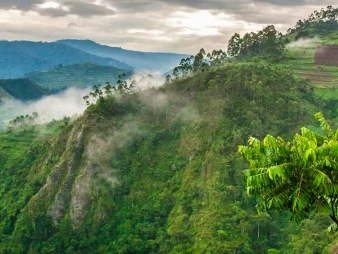
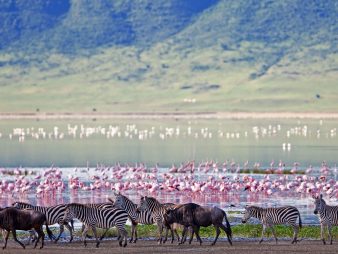
The alkaline Lake Manyara attracts thousands of flamingos and other waterbirds depending on seasonal water levels. More than 400 bird species have been recorded, making the park a prime destination for ornithologists. Its diverse habitats support elephants, buffalo, hippos, giraffes, zebras, wildebeest, and numerous antelope species. The park’s location beneath the Rift Valley wall creates dramatic scenery, with panoramic viewpoints offering sweeping vistas across the lake and surrounding grasslands.
Popular Activities
Game drives are the most popular activity in Lake Manyara National Park, offering opportunities to explore its varied ecosystems. Visitors can move from shaded forests inhabited by elephants and primates into open woodlands and floodplains where herbivores graze and predators roam. The chance to spot tree-climbing lions adds an element of rarity and excitement to the experience. Drives along the lakeshore reveal large flocks of flamingos and other waterbirds, as well as hippos wallowing in the shallows.
Birdwatching is one of the park’s strongest attractions, with a rich checklist that includes pelicans, spoonbills, hornbills, storks, and migratory species. The blend of forest, marsh, and lakeshore habitats makes it possible to observe a diverse array of birds within a relatively compact area. The presence of raptors soaring above the escarpment adds to the variety.
Nature walks and guided walking safaris are available in select areas, providing a closer connection to the environment. These walks allow visitors to learn about the park’s vegetation, track animals on foot, and gain insights into ecological interactions. The lush groundwater forest is particularly suited for walking experiences, with its towering fig and mahogany trees creating a unique atmosphere.
Cultural visits to nearby communities, particularly the Maasai, offer opportunities to learn about traditional lifestyles, local art, and the relationship between people and nature. These experiences enhance a visit by providing context to the region’s cultural heritage and daily life.
Hot springs located on the southern side of the lake add an interesting natural attraction. Though not suitable for bathing, they showcase geothermal activity and create colorful mineral formations against the landscape.