
Semuliki National Park is one of Uganda’s most biologically rich and distinct protected areas, known for its lowland tropical rainforest ecosystem that mirrors the ecological characteristics of Central Africa. Located in the western corner of the country along the borders of the Democratic Republic of Congo, the park forms part of the vast Ituri Forest, making it a unique site where West African and Central African species reach their eastern limits. Its warm climate, dense forests, bubbling hot springs, and extraordinary bird diversity create an atmosphere unlike any other national park in Uganda.
When to Visit
Semuliki National Park can be visited throughout the year, as its diverse attractions remain accessible in every season. The park’s lowland rainforest environment means that temperatures generally stay warm and humid, creating a stable climate conducive to wildlife viewing, forest walks, and hot spring exploration. However, rainfall occurs more frequently compared to other regions, and the forest canopy offers partial shelter during showers.
Travelers visiting during the wetter months may experience more challenging trail conditions, but the forest comes alive with lush growth, heightened bird activity, and vibrant colors. Those who enjoy quieter experiences and the dramatic ambiance of thick forests thriving after rain will find this period particularly rewarding. Nonetheless, adequate footwear and rain gear are recommended for comfort.
Best Time to Visit
The best time to visit Semuliki National Park is during the drier months of June to September and December to February. During these periods, trails are more manageable, visibility within the forest improves, and wildlife tends to be easier to observe. The drier conditions also make exploring the Sempaya Hot Springs more convenient and ideal for photography.
These months are especially favorable for birdwatching, as reduced foliage density allows for clearer views of both resident and migratory species. The already warm climate becomes more comfortable, and the reduced rainfall enhances accessibility for travelers arriving by road. While the park is enjoyable year-round, the dry season provides the most consistent experience for activities.
Quick Facts About Semuliki National Park
Semuliki National Park covers approximately 220 square kilometers, making it one of Uganda’s smaller parks, yet it remains one of the most ecologically diverse. The park is dominated by a lowland tropical rainforest, one of the few such forests in East Africa. This ecosystem hosts species typically associated with Central and West Africa, making it an important biodiversity refuge.
The park is renowned for its exceptional birdlife, with more than 440 bird species, many of which cannot be found elsewhere in East Africa. This makes Semuliki a premier destination for bird enthusiasts seeking rare species and unique forest specialists. In addition to birds, the park protects 53 mammal species, including forest elephants, pygmy antelopes, and several primates such as De Brazza’s monkeys and olive baboons.
A defining feature of the park is the Sempaya Hot Springs, an iconic geothermal attraction that draws visitors from across the region. These springs, consisting of the male "Bintente" and the female "Nyasimbi," showcase the geothermal activity beneath the forested landscape. The boiling water and steamy vapors rising from the springs create an otherworldly atmosphere in the middle of the forest.
Culturally, the area surrounding Semuliki is home to the Batwa (pygmy) communities, who historically lived within the forest and relied on it for survival. Their traditions, knowledge of the forest environment, and cultural expressions are an integral part of the region’s identity.
Popular Activities in Semuliki National Park
Visiting the Sempaya Hot Springs
The Sempaya Hot Springs are the park’s most iconic attraction. Visitors follow guided trails through the forest to reach the springs, where boiling water and steam erupt dramatically from underground. The female hot spring, Nyasimbi, is particularly famous for its powerful jet, creating a striking natural spectacle. Beyond the geothermal wonder, the trails offer encounters with primates, exotic trees, and vibrant birdlife.
Birdwatching
Semuliki is a true haven for birdwatchers, offering access to species not commonly found elsewhere in East Africa. The forest environment hosts hornbills, forest specialists, and rare species associated with the Congo Basin. The combination of riverine habitats, forest edges, and swampy areas supports diverse bird communities. Birdwatching here is especially rewarding for enthusiasts seeking to expand their species lists with unique forest birds.
Nature Walks and Forest Trails
Guided walks through the lush forest provide intimate exposure to the park’s biodiversity. Trails such as the Kirumia and Red Monkey tracks offer opportunities to encounter primates, butterflies, and forest-dwelling mammals. The dense canopy, tangled vines, and rich sounds of birds and insects create an immersive rainforest experience. Walks also reveal various tree species and their ecological significance.
Cultural Encounters
Visiting nearby Batwa communities offers insight into traditional lifestyles shaped by forest survival. The Batwa share stories, dances, and demonstrations of their ancient skills such as hunting techniques, medicinal plant knowledge, and forest craft. These interactions highlight their deep connection to the land and enrich the visitor’s understanding of the human history intertwined with Semuliki.
Game Viewing
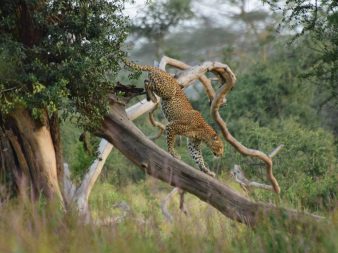
Although Semuliki is not primarily a savannah wildlife park, visitors can still encounter unique mammal species adapted to forest environments. Forest elephants, buffaloes, bush pigs, and antelopes such as the water chevrotain may be seen during guided explorations. The park also hosts predators like leopards, although these are more elusive. The variety of primates adds an additional layer of excitement to wildlife viewing.
Photography
The rainforest’s dramatic lighting, dense textures, and striking natural features make Semuliki a superb destination for photography. The hot springs provide compelling geothermal subjects, while the forest itself offers endless opportunities to capture wildlife, foliage, and atmospheric scenes. The contrast between sunlight filtering through the canopy and the rich greens of the forest enhances every shot.