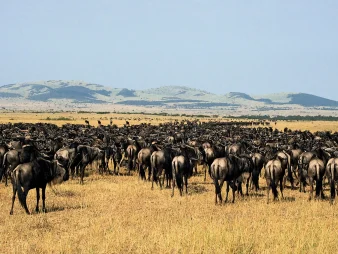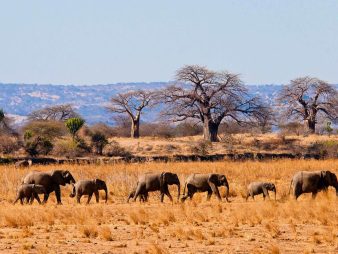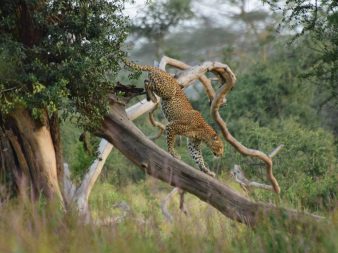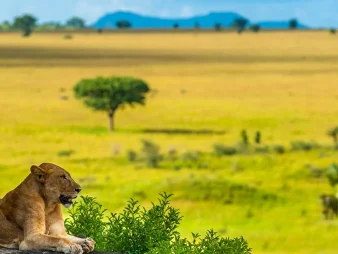

Ruaha National Park is one of Tanzania’s largest and most remote wildlife destinations, known for its rugged landscapes, dramatic river systems, and exceptional predator populations. The park’s sweeping wilderness has an untamed atmosphere, defined by ancient baobabs, rolling hills, and vast plains that stretch toward the horizon. As part of the southern safari circuit, Ruaha offers an uncrowded and immersive experience, ideal for travelers seeking a more secluded adventure in the wild.
Quick Facts About the Destination
Ruaha National Park covers more than 20,000 square kilometers, making it one of the largest protected areas in East Africa. Its size contributes to its remarkable biodiversity, with an impressive concentration of wildlife supported by the Great Ruaha River and several seasonal waterways. The landscape is dominated by iconic baobab trees, which thrive in the park’s semi-arid climate. Ruaha is known for hosting one of the continent’s largest populations of elephants, alongside a significant number of lions and other predators.
The park’s location in central Tanzania creates a transitional ecological zone where eastern and southern African wildlife species overlap. This unique blend fosters diverse animal and birdlife, including rare antelope species such as the greater kudu and sable antelope. Ruaha is also a haven for bird enthusiasts, with more than 570 recorded species. The park’s remoteness means fewer visitors compared to more famous northern circuits, providing an atmosphere of solitude where nature takes center stage.
The local culture surrounding Ruaha includes communities such as the Hehe and Maasai, whose traditions and coexistence with wildlife have shaped the region’s heritage. Their presence highlights the deep connection between people and the natural environment, contributing cultural richness to the broader safari experience.
Popular Activities
Game drives are the primary way to explore Ruaha National Park, offering exceptional opportunities to observe wildlife across diverse habitats. Morning and evening drives reveal predators on the move, elephants gathering along riverbanks, and herds of antelope navigating the open plains. The concentration of lions is particularly notable; prides in Ruaha are among the largest in Tanzania, and sightings are frequent during game drives. The park is also one of the few places where visitors may encounter wild dogs, making each drive a rewarding experience.
Walking safaris are another highlight, providing an intimate perspective on Ruaha’s ecosystems. Led by experienced guides, these walks allow travelers to appreciate the smaller details often missed from a vehicle—tracks imprinted in the sand, birdlife hidden in the thickets, and the quiet rhythm of the bush. Walking in Ruaha also reveals the striking beauty of its baobab forests and rocky outcrops, offering an immersive connection with the landscape.
Birdwatching is particularly rewarding, thanks to the park’s diverse avian population. The combination of migratory species, waterbirds along the river, and raptors soaring above the plains ensures constant activity throughout the year. Photographers also find Ruaha appealing, as the dramatic light, vivid scenery, and abundance of wildlife create ideal conditions for capturing memorable images.
Riverbank observation is an activity in itself, with the Great Ruaha River serving as a lifeline for countless animals. Watching elephants digging into the riverbeds for water, crocodiles basking on the banks, and hippos submerged in the pools provides an ever-changing natural spectacle. The river system also attracts predators, resulting in dynamic interactions and regular sightings.
When to Visit
Ruaha National Park can be visited throughout the year, each season offering distinctive experiences shaped by the region’s semi-arid climate. From November to April, the park experiences its green season, bringing scattered rains that transform the landscape into a lush, vibrant world. Vegetation becomes thicker, water sources expand, and migratory birds arrive in abundance. This season is ideal for travelers who appreciate dramatic scenery, birdlife, and fewer visitors, though wildlife may be more dispersed due to the availability of water.
The dry season, typically from June to October, presents a contrasting atmosphere. Vegetation thins out, and animals congregate along the river systems and remaining waterholes. This period enhances visibility and increases the density of wildlife sightings, making it a favored time for classic safari experiences. Cooler mornings and evenings add comfort to game drives, while warm daytime temperatures remain pleasant enough for year-round travel.
Best Time to Visit
The best time to visit Ruaha National Park is generally during the long dry season from June to October. During these months, wildlife viewing reaches its peak because animals gather in large numbers near the rivers, making sightings frequent and predictable. Predator activity also becomes heightened as opportunities to hunt increase around shrinking water sources.
This period provides excellent conditions for photography, with clear skies and soft morning and afternoon light accentuating Ruaha’s rugged landscapes. The sparse vegetation makes it easier to spot elusive species such as leopards and wild dogs. While the park is rewarding in every season, the combination of wildlife density, comfortable weather, and open visibility makes the dry season especially appealing for most visitors.