
Amboseli National Park stands as one of East Africa’s most legendary safari destinations. It lies in southern Kenya — in Kajiado County — and covers about 392 square kilometres. But Amboseli is more than just the park boundaries: it is at the heart of a much larger ecosystem that spans nearly 8,000 km², crossing community lands, conservancies and migratory corridors that extend toward Tanzania.
At the core of Amboseli’s magic is the stunning contrast: sweeping dry savannahs and dusty plains, punctuated by lush swamps and marshes fed by underground water melting from the glaciers of Mount Kilimanjaro. This makes Amboseli a life-giving oasis in otherwise semi-arid terrain. On clear mornings, the rising sun bathes herds of elephants, giraffes, zebras and buffalo in gold — often with Kilimanjaro’s snow-capped peak looming in the background.
Here’s a down-to-earth guide to what makes Amboseli unforgettable.
Quick Facts
-
Location: Loitoktok District, Kajiado County, southern Kenya.
-
Core Area: ~392 km². The broader “Amboseli Ecosystem” extends to ~8,000 km² including surrounding conservancies and migration areas.
-
Altitude: Between roughly 1,140 m (lake basin) and 1,250 m (Observation Hill); average about 1,180 m.
-
Climate & Rainfall: Annual rainfall around 340–400 mm; rainfall is seasonal, with long rains around March–May and shorter rains October–December.
-
Habitats: Open savannah plains; acacia woodlands and thorn-bush scrub; seasonal and permanent swamps/marshes; dried lake basin; seasonal lake when rains flood the basin.
-
Wildlife Richness: Around 50+ species of large mammals; elephants number ~1,800 — one of Africa’s most studied populations. Over 400 bird species recorded; the park is recognized as an Important Bird Area (IBA).
-
Human Heritage: The area has long been home to the Maasai people, whose pastoral lifestyle and traditional knowledge are woven into the landscape and conservation efforts.
What You Can See & Experience
Wildlife — Giants, Grazers and Predators
Amboseli truly lives up to its nickname “Land of Giants.” The park is perhaps best known for its majestic herds of African elephants. Many of these elephants bear impressively long tusks, and local research — one of the longest-running elephant studies in the world — has helped scientists understand elephant social behaviour, family bonds and movement patterns.
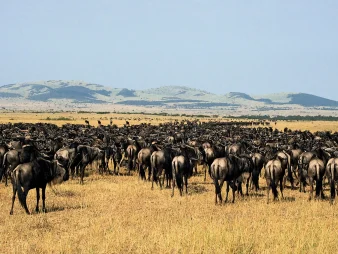
You’ll also find large herbivores such as giraffes, zebras, wildebeests, buffalo, impalas, gazelles and hippos (in swampy areas). Among carnivores, lions, cheetahs, spotted hyenas, jackals and occasionally leopards roam the plains or hide in woodlands.
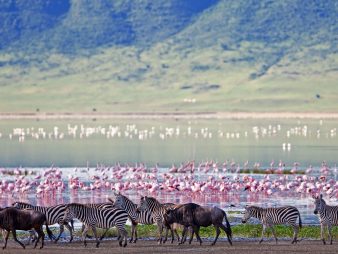
Birdlife is spectacular. Water birds like pelicans and herons, wading birds, and numerous raptors inhabit swamps and skies. On wetter or flood seasons, migratory birds enrich the diversity.
Reptiles and amphibians inhabit the swampy zones and water pools — monitor lizards, crocodiles in wetter spots, and various frogs and reptiles make their home near water.
Landscape & Scenery
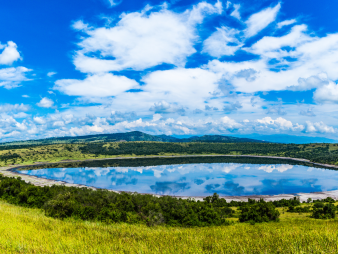
Amboseli offers an unusual blend: sweeping open plains, dense acacia woodlands, thorn-scrubland, alkaline lakebeds and marshy swamps. The underground water-fed swamps remain green even in dry seasons, attracting animals when other water sources disappear.
The iconic view of Kilimanjaro from Amboseli is perhaps among the most photographed wilderness scenes in Africa: elephants or giraffes moving across golden grasslands, with the snow-capped peak rising just beyond.
The park’s few elevated spots — like Observation Hill — offer panoramic vistas over the plains, swamps and the mountain beyond.
Popular Activities at Amboseli
-
Game Drives: Early morning and late afternoon drives offer the best wildlife sightings and light. The open terrain makes spotting animals easier. Swamps, plains, woodlands — each zone brings different animal encounters.
-
Wildlife Photography: With elephants, giraffes, buffalo, lions and many others, plus dramatic light and Kilimanjaro backdrop, Amboseli is a photographer’s dream. For many, the dream shot is a herd of elephants in golden light with the mountain behind.
-
Birdwatching: Over 400 bird species — from waterfowl to raptors — make Amboseli perfect for bird lovers. Wetlands, marshes and seasonal lakes attract diverse species.
-
Walking Observation Points: The modest climb to Observation Hill gives a sweeping view of plains, swamps and wildlife movements. It’s one of the few places where you can step out of the vehicle.
-
Cultural Encounters: The Maasai people’s cultural heritage is part of the Amboseli experience. Visitors may get exposure to traditional Maasai lifestyle, customs, and local knowledge of the land and wildlife.
-
Wetland & Swamp Visits: Exploring swampy pockets and marshlands can offer sightings of hippos, water birds, and often large elephant herds gathering where water is reliable.
Why Amboseli Feels Unique
Amboseli stands apart for several reasons. First, its water-fed swamps and marshes make it a green haven even in dry seasons. In a landscape that many think of as dusty and arid, these wet zones draw animals — a vital resource during droughts.
Second, the backdrop of Mount Kilimanjaro transforms ordinary wildlife sightings into iconic African images. The contrast of arid land, thriving herds and mountain grandeur leaves a lasting impression.
Third, Amboseli combines stunning wilderness with deep cultural roots. The Maasai presence adds human history and local community dimension to the safari experience. Conservation here is not just about protecting animals — it’s about respecting people, traditions and landscapes together.
Lastly, Amboseli’s role in conservation and scientific research — especially around elephants — gives the park global importance. It’s a place where you see more than animals: you witness ecosystems, interactions, survival and harmony in nature.